

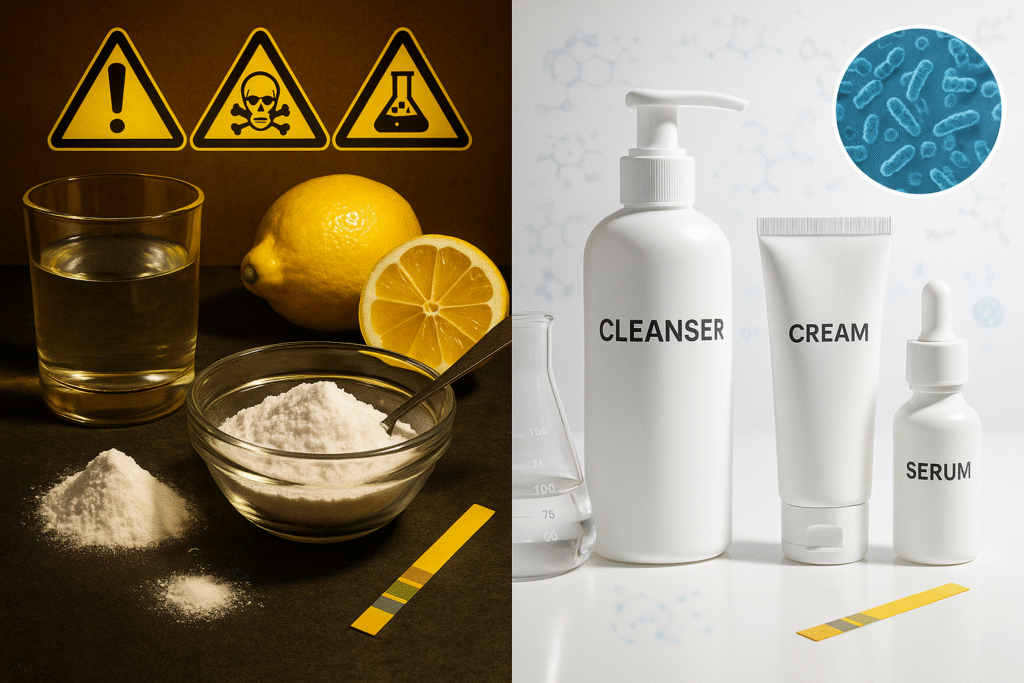
DIY Beauty: The Truth About Kitchen-Based Skincare
Introduction: "What They Say" - The Allure of Homemade Concoctions
In a world of complex ingredient lists and expensive skincare, the idea of whipping up your own beauty treatments in the kitchen can seem incredibly appealing. We're told that DIY beauty is a pure, natural, and cost-effective alternative to commercial products. Influencers and wellness bloggers showcase vibrant masks made from avocado and honey, scrubs from coffee grounds and sugar, and toners from apple cider vinegar, promising radiant skin without the chemicals or the price tag. The narrative is seductive: why buy a product when you can make it yourself with ingredients from your pantry? But here's the raw truth: while some DIY treatments can be harmless, many are ineffective at best and downright damaging at worst. Your skin is not a salad bowl, and treating it like one can have serious consequences.
"What Science Says" - The Risks and Realities of DIY Skincare
Let's get one thing straight: cosmetic science is a complex field for a reason. Formulating effective and safe skincare products requires a deep understanding of chemistry, microbiology, and dermatology. Here's why your kitchen concoctions often fall short:
Ingredient Stability and Penetration: Many beneficial ingredients found in nature, like vitamin C in lemons or antioxidants in berries, are highly unstable and cannot penetrate the skin's barrier in their raw form. Commercial products use sophisticated delivery systems and stabilizing agents to ensure that active ingredients reach their target in the skin.
pH Imbalance: Your skin has a naturally acidic pH of around 4.5-5.5. Applying highly alkaline substances like baking soda or highly acidic ingredients like straight lemon juice can disrupt this delicate balance, leading to irritation, dryness, and a compromised skin barrier.
Microbial Contamination: Homemade products lack preservatives, making them a breeding ground for bacteria, mold, and yeast. Applying contaminated products to your skin can lead to infections, breakouts, and inflammation.
Dosage and Concentration: DIY recipes lack the precision of professional formulations. You have no way of knowing the exact concentration of active ingredients, which can lead to either ineffective treatments or severe skin reactions. For example, the concentration of beneficial compounds in a plant can vary widely depending on its growing conditions and ripeness.
Skincare Without the Drama - Safer DIY Alternatives and When to Buy
While most DIY skincare is best avoided, there are a few exceptions that are generally safe and can offer some benefits. Here's how to approach DIY beauty with a healthy dose of skepticism and scientific awareness:
If you're determined to try DIY, stick to simple, low-risk treatments:
- Oatmeal Mask: Colloidal oatmeal is a well-researched ingredient that can soothe and calm irritated skin. Mix plain, uncooked oats with water to form a paste, apply to the skin for 10-15 minutes, and rinse.
- Honey Mask: Honey has natural antibacterial and humectant properties. Apply a thin layer of raw, unpasteurized honey to clean, damp skin, leave on for 15-20 minutes, and rinse thoroughly.
- Sugar or Coffee Scrub (for the body only): A simple scrub made from sugar or coffee grounds mixed with a carrier oil like coconut or olive oil can be an effective body exfoliant. Avoid using these on the delicate skin of your face, as the sharp edges of the granules can cause micro-tears.
Some ingredients have no place in your skincare routine, no matter what you read on the internet:
- Lemon Juice: The high acidity can cause severe irritation, photosensitivity, and even chemical burns.
- Baking Soda: Its high alkalinity disrupts the skin's acid mantle, leading to dryness and damage.
- Toothpaste: Contains irritating ingredients like fluoride and sodium lauryl sulfate that can burn the skin and worsen breakouts.
- Apple Cider Vinegar: While it has some antimicrobial properties, its high acidity can be damaging if not properly diluted. It's best used on your salad, not your face.
For certain skincare needs, there is no effective or safe DIY alternative. Always opt for professionally formulated products for:
- Sunscreen: There is no way to create a safe and effective sunscreen at home. Commercial sunscreens are rigorously tested to ensure they provide adequate UV protection.
- Active Treatments: Ingredients like retinoids, vitamin C, and chemical exfoliants require precise formulation and stabilization to be effective and safe. Leave these to the experts.
- Products for Sensitive or Acne-Prone Skin: If you have a specific skin condition, DIY treatments can exacerbate the problem. Stick to products formulated for your skin type and concerns.
Myths and Truths - Debunking DIY Beauty Fallacies
Myth 1: "If you can eat it, you can put it on your face."
The Truth: "Your digestive system and your skin are two very different organs. Your stomach contains strong acids that can break down food, while your skin has a delicate barrier that can be easily disrupted. Just because an ingredient is safe to ingest doesn't mean it's safe for topical application. Stick to products designed for your skin, not your lunch."
Myth 2: "DIY skincare is cheaper than buying products."
The Truth: "While the initial cost of ingredients might seem low, the potential cost of repairing the damage from a DIY disaster can be significant. A single visit to the dermatologist to treat a chemical burn or infection will cost far more than a well-formulated, science-backed product. Invest in your skin's health, not in risky kitchen experiments."
While the allure of DIY beauty is understandable, the reality is that most homemade concoctions are ineffective and potentially harmful. Your skin is a complex organ that deserves the same level of care and scientific rigor as any other part of your body. Instead of treating your face like a science fair project, invest in products that are formulated by experts, backed by research, and proven to be safe and effective.
Invest in your skin; it's the only place you'll live in forever. Less promise, more science. Your skin deserves the expertise of a cosmetic chemist, not the guesswork of a kitchen experiment.