

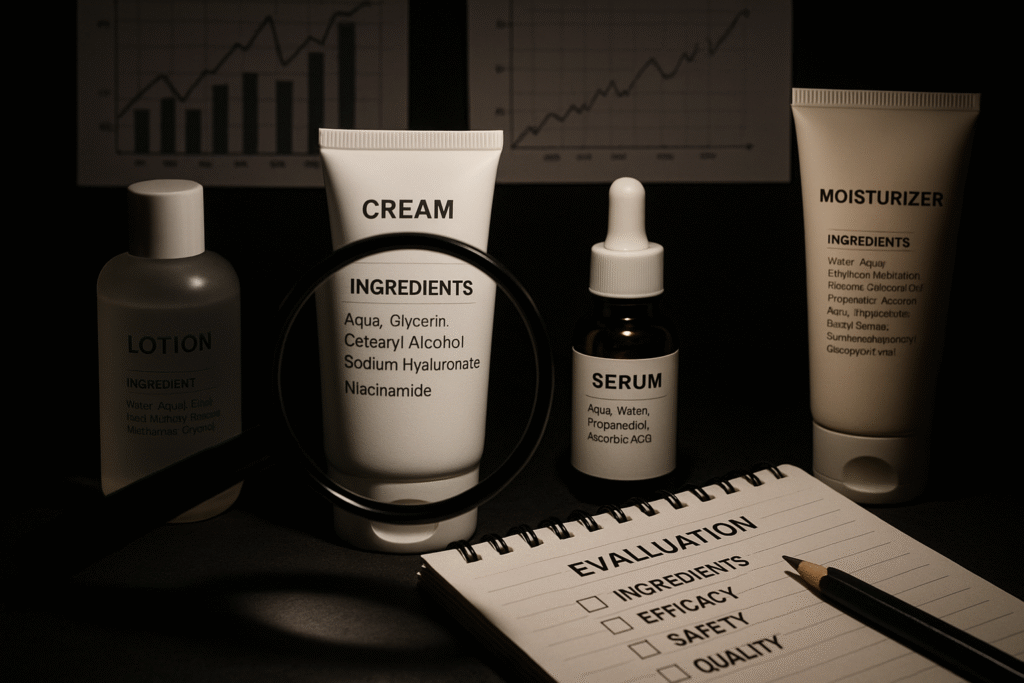
Illuminated Skin Insights: Revealing the Truth Behind Industry Hype
Introduction: "What They Say" - The Influencer Marketing Machine
Scroll through any social media platform, and you'll be inundated with glowing product reviews from influencers with seemingly perfect skin, promising that this one serum, this revolutionary cream, this "holy grail" product will transform your complexion overnight. The beauty industry has perfected the art of manufactured hype, creating artificial scarcity, leveraging fear of missing out, and using carefully curated before-and-after photos to sell products. We're told that every new launch is "groundbreaking," every ingredient is "revolutionary," and every formula is "clinically proven" – but proven by whom, and under what conditions? The uncomfortable truth is that most product reviews you see online are either paid partnerships, influenced by free products, or based on such short-term use that they're essentially meaningless. Your skin deserves better than marketing masquerading as honest evaluation.
"What Science Says" - The Anatomy of Honest Product Evaluation
Real product evaluation requires understanding formulation science, ingredient interactions, and the time it takes for skincare to show genuine results. Most active ingredients require 6-12 weeks of consistent use to demonstrate their efficacy, yet many reviews are based on first impressions or a few days of use. This creates a disconnect between marketing claims and actual performance.
When evaluating skincare products, several factors must be considered:
Ingredient Concentration and Stability: A product might contain a beneficial ingredient, but if it's present in insufficient concentrations or in an unstable formulation, it won't deliver results. For example, vitamin C products need to contain at least 10% L-ascorbic acid to be effective, and the formulation must maintain the ingredient's stability.
pH Levels: Many active ingredients are pH-dependent. AHAs work optimally at a pH of 3-4, while vitamin C requires a pH below 3.5 for maximum penetration. A product with the right ingredients but wrong pH is essentially ineffective.
Packaging and Preservation: Light-sensitive ingredients like retinol and vitamin C need opaque, airtight packaging to maintain their potency. Products in clear glass jars or with pump dispensers that allow air exposure will degrade quickly, regardless of their initial formulation quality.
Skincare Without the Drama - How to Evaluate Products Like a Pro
Learning to evaluate skincare products objectively will save you money, disappointment, and potential skin damage. Here's how to cut through the marketing noise:
The ingredient list (INCI) is your most valuable tool for product evaluation. Here's what to look for:
Active Ingredient Placement: Ingredients are listed in descending order of concentration. If a "star" ingredient appears after the preservatives (usually listed at the end), it's present in negligible amounts.
Concentration Clues:
- If water is first and glycerin is second, the product is primarily a hydrating formula
- If an active ingredient appears in the first five ingredients, it's likely present in meaningful concentrations
- Be wary of "proprietary blends" that hide actual concentrations
Red Flag Ingredients:
- High concentrations of essential oils
- Denatured alcohol high on the ingredient list
- Known allergens like fragrance or certain preservatives
Before believing any product claim, apply these critical thinking filters:
Clinical Studies vs. Marketing Claims:
- Look for peer-reviewed studies, not brand-sponsored research
- Check if studies were conducted on the actual product or just individual ingredients
- Verify sample sizes and study duration – meaningful results require adequate testing
Before and After Photos:
- Professional photography can dramatically alter appearance through lighting, angles, and filters
- Look for consistent lighting and camera angles
- Be skeptical of dramatic transformations in short timeframes
Review Source Credibility:
- Independent reviews from dermatologists or cosmetic chemists carry more weight
- Be wary of reviews from accounts that frequently promote products
- Look for detailed, balanced reviews that mention both positives and negatives
When trying new products, especially those with active ingredients, follow these safety and evaluation guidelines:
Patch Testing:
- Apply a small amount to your inner forearm or behind your ear
- Wait 24-48 hours to check for adverse reactions
- If no irritation occurs, gradually introduce the product to your routine
Gradual Introduction:
- Start with once or twice weekly application for active ingredients
- Gradually increase frequency as your skin builds tolerance
- Never introduce multiple new products simultaneously
Long-term Evaluation:
- Give products at least 6-8 weeks for meaningful assessment
- Keep a skincare diary to track changes and reactions
- Take progress photos in consistent lighting conditions
Myths and Truths - Debunking Product Review Misconceptions
Myth 1: "If a product works for an influencer, it will work for me."
The Truth: "Your skin isn't a carbon copy of someone else's, and neither should your skincare routine be. Skin type, concerns, sensitivity levels, and even climate can dramatically affect how a product performs. That $200 serum that gave your favorite influencer glowing skin might cause you breakouts or irritation. What matters is understanding your skin's unique needs and choosing products based on scientific evidence, not social media popularity."
Myth 2: "Expensive products are always better quality."
The Truth: "Price often reflects marketing budgets and packaging costs more than formulation quality. Some of the most effective skincare ingredients – like niacinamide, glycerin, and ceramides – are relatively inexpensive to produce. A well-formulated drugstore product can outperform a luxury cream that's all marketing and minimal actives. Focus on ingredient quality and concentration, not brand prestige or price point."
Myth 3: "Natural and organic products are always safer and more effective."
The Truth: "The 'natural' label is often a marketing strategy, not a guarantee of safety or efficacy. Many natural ingredients can be highly irritating or allergenic, while synthetic ingredients are often more stable, pure, and effective. Poison ivy is natural, but you wouldn't want it in your skincare routine. Judge products by their formulation science and clinical evidence, not their origin story."
Honest product evaluation isn't about being cynical – it's about being informed. In a world where marketing budgets often exceed research and development costs, your ability to critically assess products becomes your greatest asset. Remember: your skin wants respect, not the latest trend. The mirror will thank you for choosing products based on science, not hype.
Invest in your skin; it's the only place you'll live in forever. Less promise, more science. Your skin deserves products that actually work, not just ones that look good on Instagram.